


The history of Space Invaders and the 100-yen coin shortage legend
Published September 6, 2026 · Updated October 23, 2026
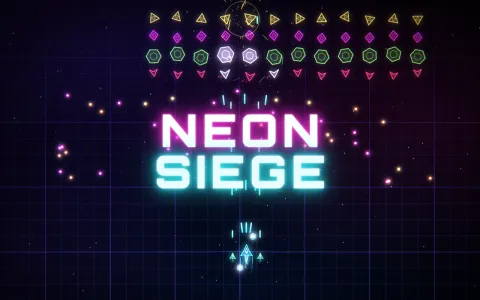 Neon SiegeNeon space shooter: alien waves, upgrades, bossesPlay now
Space Invaders was designed by Tomohiro Nishikado and released by Taito in Japan in the summer of 1978. It took him about a year to build, largely alone, and it became the first arcade game to turn a whole country into players. Along the way it picked up one of the most repeated stories in gaming — that it ate so many 100-yen coins that Japan ran short of them. That story is almost certainly false, and the reasons why say a lot about how the game actually worked. Here is where Space Invaders came from, what it changed, and how a bug became its most famous feature.
Where the aliens came from
In 1977 Taito asked Nishikado, already a veteran of its electro-mechanical games and early video titles, to come up with a response to Atari's Breakout. Breakout had shown that one paddle and a wall of targets could hold players for hours, and Nishikado's first sketch was essentially Breakout with the wall shooting back. The targets went through several forms — tanks, planes, then human soldiers, which he rejected because shooting people felt wrong for an arcade — before he settled on aliens. The shapes came from sea creatures: the wide bottom-row invader is an octopus, the crab sits in the middle, and the small one on top is a squid. Star Wars had opened that year and War of the Worlds was on his mind, so aliens it was.
Nishikado did not just design the game. Japanese microprocessors of the day could not run what he wanted, so he built the hardware himself around an imported Intel 8080, wrote the code, drew the sprites and produced the sound. The result ran at 224 by 256 pixels on a black-and-white monitor; the colour in many cabinets came from strips of tinted film stuck to the glass.
The bug that became the game
The most famous quirk of Space Invaders — the formation speeds up as you thin it out, until the last alien is sprinting — was never planned. The 8080 simply could not redraw 55 sprites quickly enough, so a full screen crawled along. Every alien you shot was one fewer to draw, and the frame rate climbed. Nishikado tried to even it out, then realised the accidental difficulty curve was better than anything he could design and left it in. Faithful versions ever since have reproduced that acceleration on purpose.
The one-shot rule is the other half of the tension. You can only have a single bullet in the air at a time, so a miss leaves you helpless until it flies off the top of the screen while the bombs keep coming. Together with the crumbling bunkers, the descending waves and the mystery UFO whining across the top, it gave arcades something new: a feeling of being under siege, with a rhythm you could learn.
The coin shortage story
The legend goes like this. Space Invaders became so popular in Japan in 1978 and 1979 that players fed so many 100-yen coins into cabinets that the coins vanished from circulation, and the Japanese mint had to triple or quadruple production to keep up. The story turned up in newspapers, history books and even record books, and it has been repeated for four decades because it feels right. Japan really was gripped: dedicated 'invader houses' opened by the thousand, cafés replaced their tables with cabinet tables, schools complained about truancy and Taito could not build machines fast enough.
There is a kernel of truth in the mania and none, as far as anyone can show, in the coins. A cabinet is not a piggy bank: every coin dropped into a machine was collected by the operator within days and banked, going straight back into circulation. For a national shortage the coins would have had to leave the economy, and they did nothing of the kind. Published production figures for the 100-yen coin show no emergency run in 1978 or 1979 that matches the story, and Nishikado himself has said in interviews that he does not think the shortage happened. The likely origin is a real, local nuisance — arcades running low on change at the peak — inflated with each retelling into a national crisis.
What Space Invaders really did
The documented numbers are impressive enough without the coins. Taito is generally credited with selling around 100,000 cabinets in Japan, and Midway, which licensed the game for North America, tens of thousands more; the usual estimate is about 360,000 machines worldwide and several billion dollars in coin drop by the early 1980s. Arcades in the West had been a niche for pinball and a handful of video games; after Space Invaders they became an industry.
It also rewired how games kept you playing. Space Invaders is widely credited as the first arcade game to save the high score and show it on screen — just the number, no initials yet, but enough to turn a coin-op into a competition with a stranger who had stood there an hour earlier. The 'hi-score' line became the template for leaderboards ever since, and the four-note bass loop that quickens as the aliens descend is an early example of music reacting to the action.
Then it went home. Atari licensed Space Invaders for its 2600 console in 1980, the first official home conversion of an arcade hit, and it sold over two million cartridges in its first year — the first console 'killer app', bought for the sake of one game.
Descendants
Space Invaders drew a straight line from Breakout and then handed the baton on. Galaxian in 1979 gave the aliens colour and let them dive out of formation, Galaga added the double ship, and the fixed shooter became a genre that leads to the vertical shoot-'em-ups of the 1980s and every mobile game where you tap to fire at a descending wave. Its cousin from the other side of the family is still around too: Brickstorm on crokocat is the Breakout idea Nishikado started from — a paddle, a ball and a wall of bricks to demolish — with the powerups the genre grew into. Neon Siege, also on crokocat, sits at the far end of the same line: its alien formations still sway and creep down the screen like the 1978 wave, but they break off to dive at you the way Galaxian's did.
Neon SiegeNeon space shooter: alien waves, upgrades, bossesPlay now BrickstormSmash every brickPlay now
The idea in a modern shooter
Neon Siege on crokocat is not a recreation of the 1978 machine but a modern shooter built on the same idea: an alien formation that sways, creeps toward you and shoots back. It keeps the feeling of being under siege, adds Galaga-style swooping dives and draws everything in glowing vector lines over a grid that ripples when something explodes. The sectors never run out, and every fifth one ends with a boss.
The rest of the rules are modern too. Your ship fires by itself, so you steer with the mouse or a finger and pick one of three upgrade cards after every sector — more bullets, homing missiles, orbs that circle the ship and swallow enemy fire. Shards dropped by enemies buy permanent upgrades between runs. It is free in the browser on desktop and phones: no download, and no coins, 100-yen or otherwise.
Frequently asked questions
Who made Space Invaders?
Tomohiro Nishikado designed and programmed Space Invaders at Taito, and built its hardware himself around an Intel 8080. Taito released it in Japan in 1978 and licensed it to Midway for North America.
Did Space Invaders really cause a 100-yen coin shortage in Japan?
Almost certainly not. Coins spent in arcades are collected and banked within days, so they never left circulation, and production figures for the 100-yen coin show no emergency spike. Nishikado himself has said he does not believe it happened. What is true is that the game was a national craze, with thousands of dedicated 'invader houses'.
Why do the aliens speed up as you shoot them?
It was a hardware limitation that became a feature. The Intel 8080 could not redraw all 55 aliens fast enough, so the game ran slowly with a full screen and faster as sprites disappeared. Nishikado decided the accidental difficulty curve worked and kept it, and later versions reproduce it on purpose.
Was Space Invaders the first game with a high score?
It is widely credited as the first arcade game to save the top score and display it on screen. It showed only the number; entering your initials came a year later with Asteroids.
Can I play a game like Space Invaders on crokocat?
Yes. Neon Siege is a free browser shooter in the same tradition: a swaying alien formation that creeps down and shoots back, plus Galaga-style dives, an upgrade card after every sector and a boss every fifth sector. It is a separate modern game rather than a copy of the 1978 original, and it runs on desktop and mobile with no download.
Guides & tips
Play it here
- Neon Siege — Neon space shooter: alien waves, upgrades, bosses
- Brickstorm — Smash every brick