


Long nardy vs backgammon: what is different and which to play
Published October 6, 2026 · Updated October 17, 2026
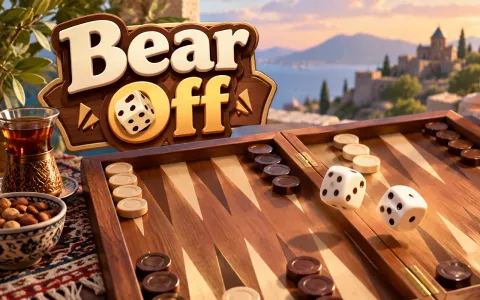 BearoffBackgammon and long nardy — roll, race and bear offPlay now
Long nardy and backgammon are close relatives: the same kind of board, two dice, fifteen checkers a side and a race to bear every checker off first. The big difference is contact. In backgammon the two sides move in opposite directions and can hit each other's lone checkers, sending them back to the bar. In long nardy both sides travel the same way round, nobody is ever hit, and you may never land on a point the other side holds, so the game turns into a race with walls. If you have to pick one: choose backgammon for tactics and sudden swings, long nardy for steady building and blocking.
What they have in common
Both games are dice-and-checker race games. Each side has fifteen checkers, you roll two dice, and you move checkers by the numbers shown. Both dice have to be used when they can be, and a double is played four times. If only one die can be played, it has to be the larger one. When all fifteen checkers are home, you move them off the board, and the first side with everything off wins.
That shared skeleton is why one game can offer both. In Bearoff, the two versions run on the same board and the same engine, which finds every legal play for you and shows where each checker may go. What changes is the rule about contact, and that one rule changes almost everything about how you think.
BearoffBackgammon and long nardy — roll, race and bear offPlay nowDirection: head to head or one behind the other
In backgammon you move toward your home at the bottom of the board while the other side comes the opposite way. The two armies pass through each other, which is where all the fighting happens.
In long nardy both sides go the same way round, starting from opposite corners. The two armies chase each other instead of meeting, so a checker is never in danger of being captured. The question is never whether you will be hit, only whether you will be blocked.
Hitting: the biggest difference
Backgammon is a game of exposure. Two checkers on a point make a safe place that nobody can land on. A single checker is a blot, and if the other side lands on it, it is hit and sent to the bar. From there it has to come back in before anything else of yours can move, which can cost you a lot of ground in a race.
Long nardy has no hitting at all. You can never land where the other side stands, so a checker is safe wherever it sits. Blots do not exist as a concept, and the tension comes from somewhere else: the other side's checkers decide which squares you are allowed to use.
Walls, heads and the six-point rule
Because nobody can be hit, long nardy is about building walls. Points in front of the other side's checkers stop their numbers from working, which slows them down. A rule keeps this fair: six points in a row may not shut the other side in completely.
Long nardy adds a rule about the head, the spot where your checkers start. Only one checker may leave the head each turn, except on a first 6-6, 4-4 or 3-3. A crowded head costs tempo later, so steady development matters from the first move.
Backgammon has nothing like the head rule. Instead it has points and the bar: make points to block, and keep your blots out of reach.
How each one feels to play
Backgammon swings. A single hit can turn a lost race into a close one, and a well-timed block can trap a checker for several turns. Good play means choosing between safe moves and brave ones, and counting the pips, the total distance each side still has to go, to know who is ahead in the race.
Long nardy is calmer and more like construction. You never worry about a surprise hit, but you do plan several moves ahead: where to spread checkers off the head, which points to take to hem the other side in, and how to avoid being walled in yourself. Long nardy is a favourite in Russia, the Caucasus and Central Asia.
Which one should you start with?
If you like tactics, risk and the occasional comeback, start with backgammon. If you prefer to build a plan and watch it work, or you grew up with nardy, start there. Neither needs the other, and moving between them is easier than you would expect, since the dice, the board and the bear-off are the same.
In Bearoff you can try both without leaving the game: a ladder of games against a bot that plays tighter as you climb, or two players on one device. A coached first game helps if the rules are new, and Undo takes back a step of your own turn, so you can test a plan before you commit to it.
More classics once you have the board bug
If dice and checkers have you hooked, other crokocat classics are close at hand. Crown Hop is checkers and draughts in four rule sets, and Pawnstorm is full chess against a bot that grows with you. For a very different pace, Five Stones is gomoku: get five in a row before the other side does.
 Crown HopCheckers and draughts — Classic, Russian, Brazilian or InternationalPlay now
 PawnstormChess against a bot that grows with you — or with a friendPlay now
 Five StonesGomoku on a 3D board — get five in a row before they doPlay now
Frequently asked questions
Is nardy the same as backgammon?
No. They share the board, the dice and fifteen checkers, but long nardy has no hitting and both sides move the same way round, while backgammon lets you hit single checkers and sends the sides in opposite directions.
What is long nardy?
A classic from Russia, the Caucasus and Central Asia in which both sides move the same way round, there is no hitting, and you may never land on a point the other side holds.
Which is easier for a beginner, backgammon or long nardy?
Both can be learned in a game or two. Long nardy removes the risk of being hit, while backgammon adds tactics with blots and the bar. Bearoff has a coached first game for either.
Can I play both in Bearoff?
Yes. Bearoff plays standard backgammon and long nardy on the same board, against a bot that gets stronger with each level or with a friend on one device.
Is there a doubling cube in Bearoff?
No. Each game is simply won or lost, and a bigger win earns more stars.
Play it here
- Bearoff — Backgammon and long nardy — roll, race and bear off
- Crown Hop — Checkers and draughts — Classic, Russian, Brazilian or International
- Pawnstorm — Chess against a bot that grows with you — or with a friend
- Five Stones — Gomoku on a 3D board — get five in a row before they do