


How .io games took over the browser
Published September 14, 2026 · Updated September 16, 2026
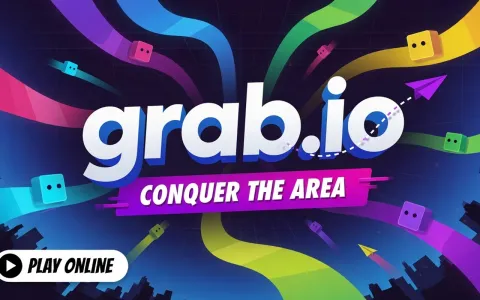 grab.ioDraw, enclose, conquer the discPlay now
The .io in .io games does not stand for anything about games at all. It is a country-code domain — the internet suffix assigned to the British Indian Ocean Territory — that programmers had already adopted because it reads like input/output. When a small browser game called Agar.io went viral in 2015, it happened to live on one of those domains, and the hundreds of games that copied it kept the suffix. Within a year, .io had stopped being an address and become a genre: free, multiplayer, instant to load, played in a browser tab with nothing to install. Here is how a two-letter domain became a category of its own, why the formula worked, and where it went next.
What .io actually means
Every country gets a two-letter internet domain: .de for Germany, .jp for Japan. The British Indian Ocean Territory — a handful of islands with almost no permanent population — got .io. For years hardly anyone used it. Then tech startups noticed that io is also shorthand for input/output, and that short, memorable domains were getting hard to find under .com. By the early 2010s, .io was the fashionable suffix for developer tools and small web companies.
Game developers picked it up for the same reasons: cheap, available, and technical-looking in a way that suited a game written in a weekend. None of that had anything to do with gameplay. If Agar.io had launched as Agar.net, we would probably be talking about .net games today. The name stuck because the first hit wore it, and every imitator wanted to look like the first hit.
Agar.io: the game that named a genre
In April 2015 a 19-year-old Brazilian developer, Matheus Valadares, posted a link to a game he had built on a forum. You were a circle on a grid. You ate small dots to grow, you ate smaller circles — other players — to grow faster, and anything bigger than you could eat you. That was the whole thing. No tutorial, no account, no loading screen worth mentioning. You typed a name, pressed play and were in a live arena with hundreds of strangers within seconds.
It spread the way nothing on a download store could. A link was all it took to bring a friend in, streamers could show it in one sitting, and school computer labs, which blocked installs but not websites, turned into Agar.io tournaments. Within months it was one of the most visited game pages on the web, and by year's end the publisher Miniclip had bought it. The template was set: one simple rule, one shared map, a name box and a play button.
Why the formula worked
The .io games that followed borrowed four things from Agar.io, and each one was a deliberate rejection of how big games were being made. First, no install and no sign-up. In 2015 a typical multiplayer game meant a launcher, a download measured in gigabytes and an account; an .io game was a URL. Second, one rule you learn in ten seconds — grow by eating, claim by enclosing, survive by not touching a trail. Third, drop-in play: matches were already running, so you never waited in a lobby, and dying just meant pressing play again. Fourth, everyone on the map was a threat and a target, so a full arena was never boring.
The timing was right too. Browsers had just gained WebSockets for a fast, persistent connection to a server, canvas and WebGL for drawing thousands of moving objects smoothly, and touch input that worked on phones. A single developer could build and host something that felt like an online game, which a few years earlier would have needed a studio.
The wave of 2016: Slither, Diep, Paper and Splix
The year after Agar.io was the genre's golden year. Slither.io, released in early 2016, was Snake with other people: a worm that grows by eating glowing pellets and dies the moment its head touches another player's body. It reached the top of the mobile app charts and made the genre a phone habit, not just a browser one. Diep.io, from the same creator as Agar.io, turned the circle into a tank and added upgrade trees.
Paper.io and Splix.io introduced the mechanic that many players now think of as the .io game: territory. Your own colour is safe ground; the moment you leave it you drag a fragile trail behind you, and only when you loop back home does everything you enclosed become yours. Anyone who crosses your trail before you get back kills you. It combines greed and fear in a way the eating games never quite managed, and it is the loop grab.io on crokocat is built on: leave your patch, draw a loop, snap it shut, and hope nobody cuts your line before you make it home.
grab.ioDraw, enclose, conquer the discPlay nowFrom arena to everything
By 2017 and 2018 the .io suffix had outgrown its origins. Surviv.io and Zombs Royale compressed battle royale into a top-down browser game you could finish in five minutes. Krunker.io proved a first-person shooter could run in a tab with real players and a competitive scene. Whatever the genre, the promise was the same as in 2015: click a link, play immediately, against people.
Something else changed quietly along the way. Many of the biggest .io hits, especially on mobile, replaced their live servers with bots: the players you were beating in some versions of Paper.io were scripted opponents that made a match feel busy without the cost and lag of real networking. Purists complained, but it solved a real problem — an arena with nobody in it is no fun, and bots guarantee a full map at three in the morning. grab.io takes the same approach openly: you drop into a lobby already running, where the bots have names, history and territory of their own, and the crown goes to whoever has survived longest.
What survived, and where to play it
A decade on, the domain matters less than the design. Plenty of games that play exactly like .io games live on ordinary addresses, and plenty of .io domains host no games at all. What survived is the formula: a rule you can explain in one sentence, a match that starts instantly, a map that is never empty, and nothing to install. That is why .io still works as a search term — people are not looking for a domain, they are looking for that feeling.
On crokocat you can trace the family tree in three tabs. grab.io is the territory loop — mouse or finger steering on a round map, collectible stars, unlockable skins and a crown for outlasting the field. Cube Arena is the shooter branch: a blocky first-person deathmatch, first to 15 frags, with public rooms and a private room code for friends, desktop only. And Snake is the ancestor of the lot, the original game about not touching the trail behind you. All three are free, load in a browser tab and need no account — exactly the point the .io games were making in the first place.
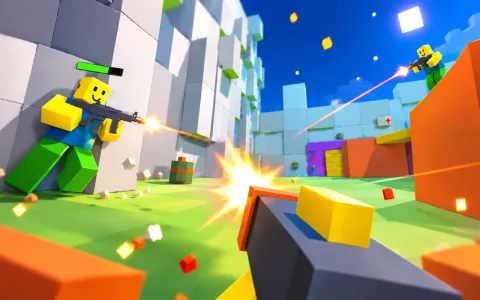 Cube ArenaBlocky arena FPS — 15 frags to winPlay now
Frequently asked questions
What does .io mean in games?
Nothing about games. .io is the internet country-code domain of the British Indian Ocean Territory. Programmers adopted it because io reads like input/output, and when Agar.io went viral in 2015 the games that copied it kept the suffix. Today .io game simply means a free, instant-to-load browser game, usually multiplayer, with one simple rule.
What was the first .io game?
Agar.io, released in April 2015 by Matheus Valadares, is the game that started the genre. There were browser multiplayer games before it, but Agar.io is the one that made the no-install, name-box-and-play format famous and gave the category its name.
Why did .io games become so popular?
Four things: nothing to install and no account, a rule you learn in seconds, matches you drop into instantly, and a shared map where everyone is both a threat and a target. Because a link was all it took to bring a friend in, they spread faster than anything on a download store.
Are the other players in .io games real?
It depends on the game. Agar.io and Slither.io ran live servers full of real people. Many later hits, especially mobile versions of Paper.io, use bots so the map is always full. grab.io on crokocat does this openly: you join a lobby of named bots that already hold territory, and you win the crown by outlasting them.
Which .io games can I play free in the browser?
On crokocat, grab.io is a paper.io-style land-grab game on a round map, Cube Arena is a blocky arena shooter with public and private rooms, and Snake is the classic the trail rule came from. All three run free in a browser tab with no download and no sign-up.
Guides & tips
Play it here
- grab.io — Draw, enclose, conquer the disc
- Cube Arena — Blocky arena FPS — 15 frags to win
- Samurai Snake — Snake reforged in 16-bit 3D — with a ninja boss