


Set it up, then watch it run: gravity-based puzzle games in your browser
Published October 8, 2026 · Updated October 22, 2026
 Sand RollDig the sand, feed the hungry ballPlay now
Gravity-based puzzle games share one trick: you spend your time preparing, then you let physics play the result. You dig a tunnel, turn a valve, slide a tray or release a marble, and the interesting part is what happens next. That pause between your move and its outcome is why satisfying physics puzzle games feel so different from puzzles you solve by pure logic. This article explains how the genre works and why it is so watchable, then points to four free examples on crokocat: Sand Roll, Water Maze, Sand Drop and Rainbow Sort.
What makes a puzzle gravity-based
In a classic logic puzzle, every move changes the board immediately and you see the whole consequence at once. A gravity puzzle splits the turn in two. First you change the setup. Then the game applies a rule you cannot override, and things fall, roll, pour or ride along a belt until they settle.
That split gives the genre two shapes of difficulty. One is planning: you have to predict the result of a setup you cannot take back, or can only fix by restarting. The other is timing: some games start the physics as soon as the level opens, so your preparation window is short.
The result is a puzzle that is easy to learn, because the physics is something everybody already understands, and still has depth, because the consequences of a small change spread.
Sand Roll: carve the route
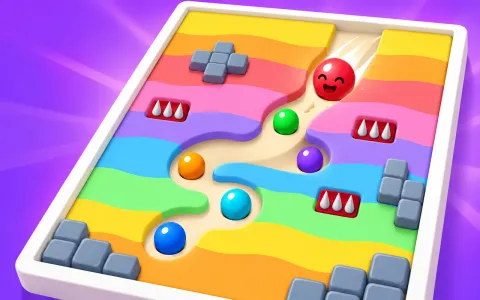
Sand Roll is the most direct version of the idea. A hungry ball waits at the top of a box of rainbow sand, and little critters hide in pockets below. You drag a finger through the sand to dig, and whatever is free rolls down the tunnel you made. Your whole contribution is a shape in the sand.
What makes it a good example of the genre is that the rule is simple to see and unforgiving to ignore: balls stop on flat sand, so the slope of your tunnel is the puzzle. Rocks cannot be dug and red spikes end the level, so each level asks you to draw a route past obstacles you can see, before you watch it run.
Sand RollDig the sand, feed the hungry ballPlay nowWater Maze: choose the branch before the water arrives
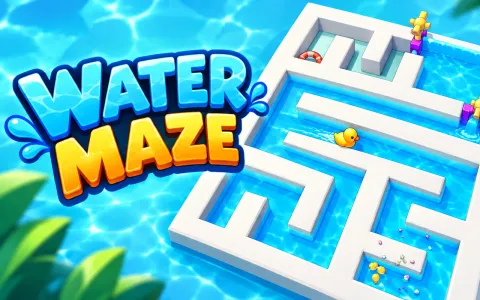
Water Maze shifts the preparation from digging to switching. A tank of water starts running the second the level opens, and a flower at the bottom is waiting to be watered. You tap valves to decide which of two corridors the stream takes at each junction.
Here the physics is the timer. A valve only matters before the stream reaches it, and water only goes down and sideways, so a corridor above the stream is one it will never visit. The game rewards a quick look at the whole maze in the first moments, then precise taps. It is a gravity puzzle where the clock is built into the water itself.
 Water MazeTurn the valves, send the water to the flowerPlay now
Sand Drop: let the grains do the sorting
In Sand Drop the physics is the picture. Jars hold sand laid down as a sunset, dunes or a small pixel heart, and the sand pours from the bottom of the jar into a tray of the same colour. You slide Tetris-shaped trays around a grid to catch each colour as it reaches the floor.
The lesson of the genre shows up clearly here: the order of events is the puzzle. As the bottom of a jar drains, the picture sags and a new colour arrives, so you plan which tray has to be where one step later. It is also one of the more visual games on the list, since the pour itself is the reward.
 Sand DropPour the sand pictures into matching traysPlay now
Rainbow Sort: marbles on a moving belt
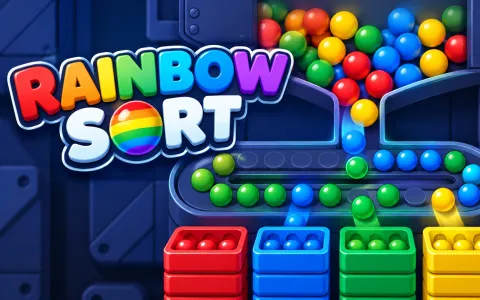
Rainbow Sort brings in the conveyor. You tap a tray to release its next marble onto a moving belt, then steer each marble into the box of its own colour. A full box clears, and the belt must never overflow.
It is the most hands-on game in this group, because you are releasing marbles one at a time rather than preparing everything and watching. It sits closer to a sorting puzzle than to a pure physics one, but the same pleasure applies: you decide what goes onto the belt, and the belt decides where it ends up.
 Rainbow SortRoll every marble into its colorPlay now
Why these games feel satisfying
Three things recur. The first is cause and effect you can read: when a ball rolls into a tunnel, you know why. The second is a quick feedback loop: you can see straight away why an attempt failed, and you can restart the level any time. The third is spectacle: things fall, stream and clink, and watching them is a small reward on top of solving.
If you want to try the genre, start with Sand Roll or Water Maze for the cleanest version of set-up-then-watch, and move to Sand Drop when you want more to plan. Rainbow Sort is the right pick when you prefer to keep your hands on the controls throughout.
Frequently asked questions
What is a gravity-based puzzle game?
A puzzle where you prepare a setup, such as digging a tunnel or turning a valve, and then physics decides the outcome. Things fall, roll or pour along the path you made.
Which gravity puzzle should I start with?
Sand Roll or Water Maze. Both have one clear action, dragging through sand or tapping a valve, and the result is easy to read.
Do these games need a download?
No. Sand Roll, Water Maze, Sand Drop and Rainbow Sort are free on crokocat and run in your browser on desktop, phone and tablet.
Are the levels timed?
It depends on the game. In Water Maze the water starts running as soon as the level opens, and Sand Drop has a time bar that starts with your first move. In Sand Roll you shape a tunnel and then watch it run, and stars reward digging less sand.
Which one has the most to watch?
Sand Drop. The sand is simulated grain by grain, so every pour looks a little different.
Guides & tips
Play it here
- Sand Roll — Dig the sand, feed the hungry ball
- Water Maze — Turn the valves, send the water to the flower
- Sand Drop — Pour the sand pictures into matching trays
- Rainbow Sort — Roll every marble into its color