


Cryptogram vs cryptoquote: what the difference is and where to play both
Published October 7, 2026 · Updated October 12, 2026
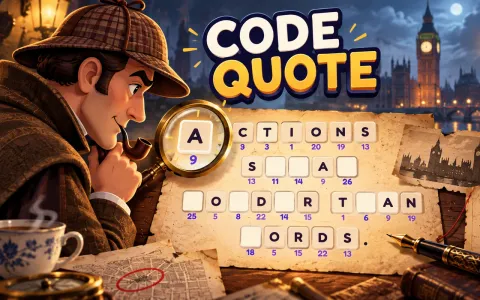 Code QuoteCrack the number code, reveal the sayingPlay now
A cryptogram and a cryptoquote are the same kind of puzzle. Both hide a sentence behind a simple code in which every letter is swapped for another symbol, and your job is to work out the swaps until the sentence reads normally. The name is the only real difference: cryptogram is the general term for the puzzle, while cryptoquote is the name newspapers use for the daily version, where the hidden sentence is a saying or quotation. If you want to try one right now, Code Quote on crokocat is a free browser cryptogram where numbers 1 to 26 stand for letters, and the rest of this page explains how the family fits together.
One puzzle, two names
Cryptograms are one of the oldest word puzzles around. The idea is a substitution code: every A in the sentence becomes the same symbol, every B becomes another, and so on through the alphabet. The same symbol always means the same letter, which is the weakness you use to break it. Puzzle books fill whole volumes with them, and a cryptoquote has run in many daily newspapers for decades.
So when someone asks about cryptogram vs cryptoquote, the answer is that one word names the puzzle type and the other names a familiar version of it. A cryptoquote is a cryptogram whose answer is a quotation or a proverb. A cryptogram can hide any sentence at all, though in practice most of the ones you meet online hide a saying too.
How the code works in practice
In the puzzles you find on paper, the code is usually a different letter: a P stands for an E, a Q stands for a T. On phones and in the browser, the code is often a number instead. In Code Quote every letter is replaced by a number from 1 to 26, with a fresh key on every level, and a few letters are already shown to give you a start.
You tap a cell, pick a letter, and if it is right every cell with the same number fills in at once. That is the whole loop. One good guess can open half the sentence, which is why the early moves matter most: short words give themselves away, because a single-letter word is almost always A or I and a three-letter word that keeps coming back is often THE.
Code QuoteCrack the number code, reveal the sayingPlay nowWhy the saying is the clue
Hidden sentences are not random letters. In Code Quote they are familiar English sayings, from Practice makes perfect to A journey of a thousand miles begins with a single step, and that is a feature, not a coincidence. Knowing the shape of a proverb gives you something to aim at: once you have a few letters, you can often guess the rest of the phrase before you have decoded it.
That makes a cryptogram a different kind of challenge from other letter games. You are not searching for a word from a list, and you are not narrowing down one hidden word with feedback. You are reconstructing a whole sentence from the pattern of repeated symbols, and the reward is that the answer reads like something you have heard before.
Where it sits among other word games
Cryptograms get compared to other word puzzles all the time, and the differences are worth knowing. Fiver is the five-letter word game: six tries to find a hidden word, with every try marked letter by letter, and you can play the daily word or unlimited levels in any of eight languages. The puzzle is one word at a time, and the game tells you after each try how close you were.
Letter Sweep is a word search on a tray of chunky letter tiles: each level has a theme and a list of words hidden in the grid, and you drag across a word to find it. There the words are already in front of you and the work is spotting them. A cryptogram sits between the two: nothing is hidden among decoys, but nothing is spelled out either, and you earn each letter by reasoning.
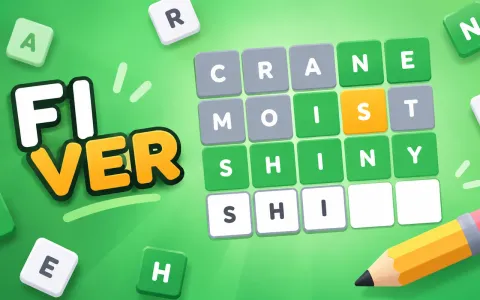 FiverFive-letter word game — daily word and levels, 8 languagesPlay now
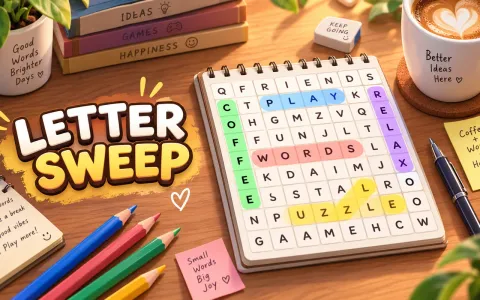 Letter SweepWord search on 3D letter tiles — drag across, find every wordPlay now
Which one should you start with?
If you like quiet, thinking-heavy puzzles, start with a cryptogram. Code Quote gives you three hearts per level, so a wrong letter costs a heart and three wrong letters end it, and a bulb reveals one letter when you are stuck. Solving without a mistake earns all three stars.
If you prefer something quick and daily, Fiver gives everyone the same word each day. If you like spotting things, Letter Sweep is the relaxed pick. All three are free in the browser with nothing to install.
Frequently asked questions
Is a cryptoquote the same as a cryptogram?
In practice, yes. Both are letter-substitution puzzles. Cryptogram is the general name; cryptoquote is the name used for the newspaper version, where the hidden text is a quotation.
What is a cryptogram?
A sentence written in a simple code where each letter is replaced by a symbol. In Code Quote the symbol is a number from 1 to 26, and you find the original letters to read the sentence.
Is Code Quote a cryptogram or a cryptoquote?
It is a cryptogram whose hidden sentences are traditional English sayings and proverbs, so it covers both names.
Does the same number always mean the same letter?
Yes, within a level. A right letter fills every cell with that number at once, and each level has a fresh key.
Can I play cryptograms free in my browser?
Yes. Code Quote is free on crokocat with no download and no sign-up, and it runs on desktop, phone and tablet.
Guides & tips
Play it here
- Code Quote — Crack the number code, reveal the saying
- Fiver — Five-letter word game — daily word and levels, 8 languages
- Letter Sweep — Word search on 3D letter tiles — drag across, find every word