


Are cryptograms good for your brain?
Published November 13, 2026 · Updated November 25, 2026
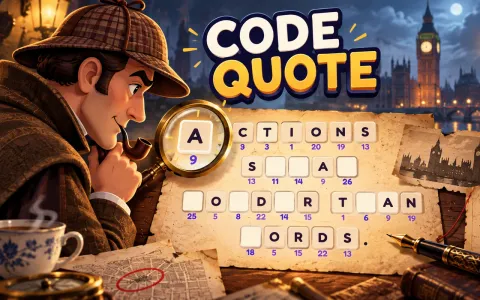 Code QuoteCrack the number code, reveal the sayingPlay now
Cryptograms are a good workout for a specific set of mental skills: spotting patterns in letters, holding several guesses in mind at once, and testing them against what you know about how English words are built. Research on word puzzles in general links a regular puzzle habit with better scores on memory and reasoning tests, especially in older adults. What nobody has shown is that cryptograms themselves cause a sharper brain or prevent decline, and there is little research on cryptograms specifically. So the fair answer is yes, they exercise your brain, with a modest and honest list of what that does and does not mean.
What the research on word puzzles shows
Most of the evidence comes from studies of word puzzles as a group, with crosswords as the usual example. The most often cited is a large online study of adults over 50 in the UK, part of the PROTECT project, which asked thousands of people how often they did word puzzles and gave them cognitive tests. The more often people said they did word puzzles, the better they tended to score on tests of attention, reasoning and memory.
Older work points the same way. A long-running study of older adults in the Bronx followed people for years and found that those who did more mentally active leisure, crosswords included, were less likely to develop dementia over the study period.
Both are observational. They show that a puzzle habit and better test scores go together, not that the puzzle produced the scores. People with sharper minds may simply enjoy puzzles more, and education, sleep and an active social life can drive both. That is why careful researchers say puzzles are associated with healthier cognition, not that they protect against decline.
What a cryptogram actually trains
Even without a cryptogram-only study, it is clear what the puzzle asks of you. Each number stands for one letter, and you rebuild a saying from a handful of clues. That leans on several skills at once.
Pattern recognition does most of the work. A one-letter word is almost always A or I. A three-letter word that keeps coming back is often THE or AND. A letter that doubles inside a word is likely L, S, E or O. Spotting those shapes in a row of numbers is the core of every solve.
Working memory comes next. You hold a guess about one word while you check what it would do to the others, then keep or drop it. Vocabulary and knowledge of common sayings help too: once half a proverb shows, you often recognise the rest. And there is plain deduction, ruling letters out until only one fits.
Those are real skills, and getting better at cryptograms means getting better at using them inside a cryptogram. How far that carries into everyday memory is the open question. Research on brain-training games in general finds that people improve most at the task they practise, with smaller and less certain gains elsewhere.
Cryptograms next to sudoku and Wordle-style games
Different puzzles lean on different skills, which is a good reason to mix them. Sudoku, which you can play as Grid Zen, is pure logic with digits: no vocabulary, lots of elimination across rows, columns and boxes. A five-letter word game like Fiver gives you six tries to find a hidden word, with each try marked letter by letter, so it trains narrowing down a word from feedback.
A cryptogram sits between them. It has the elimination of sudoku, because each letter can only be used once in the key, but it also needs the language knowledge of a word game. If you want variety, a cryptogram is a sensible third puzzle next to a number grid and a daily word.
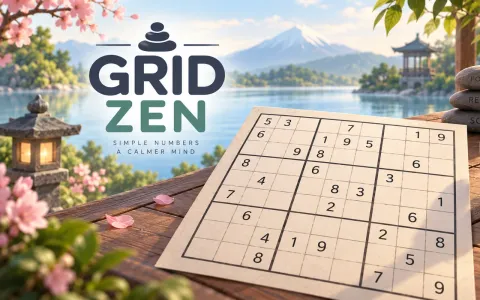 Grid ZenSudoku on soft 3D tiles — one answer, no guessing, three heartsPlay now
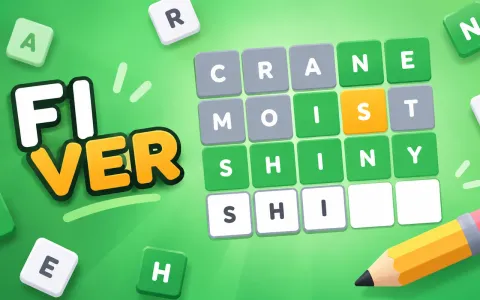 FiverFive-letter word game — daily word and levels, 8 languagesPlay now
Why the habit matters more than the difficulty
In the word-puzzle studies, the clearest pattern is about frequency: people who puzzle often score better than people who puzzle now and then. Nothing in that research says the hardest puzzles are the most useful. A cryptogram you look forward to every day does more for a lasting habit than a brutal one that puts you off after a single try.
That makes difficulty a tool rather than a goal. Start where you finish most puzzles, and move to longer, barer sayings once the short ones feel easy.
A cryptogram you can keep coming back to
Code Quote is built around that kind of steady habit. Every level is a well-known English saying written in numbers, with a fresh key on each level. The first levels are short sayings with many letters already shown, and the puzzles grow longer and barer as you climb, so the difficulty follows you rather than the other way round.
A right letter fills every cell with that number at once, and the keyboard greys out letters already placed, which keeps the reasoning in front of you instead of the bookkeeping. A wrong letter costs one of three hearts, which nudges you to think before you guess, and a bulb reveals a letter when you are truly stuck. It is free in the browser on desktop, phone and tablet, so a daily puzzle needs no install.
Code QuoteCrack the number code, reveal the sayingPlay nowFrequently asked questions
Do cryptograms improve memory?
They exercise working memory, because you hold guesses in mind while you test them. Studies link frequent word puzzles with better memory scores, but they do not prove the puzzles cause the improvement.
Can cryptograms prevent dementia?
No study has shown that. Research finds that people who do word puzzles often tend to score better on cognitive tests, but that is an association, not proof of protection.
Are cryptograms good for seniors?
They are a reasonable choice: they are calm, use language and logic together, and can be played daily. The research on word puzzles that exists was mostly done with adults over 50.
Are cryptograms harder than crosswords?
They test different things. A crossword asks you to recall words from clues; a cryptogram asks you to crack a letter code from patterns. Many people find one much easier than the other.
How often should I do a cryptogram?
Regularly matters more than hard. The studies that find the clearest link measure how often people puzzle, so a short daily puzzle is a good aim.
Guides & tips
Play it here
- Code Quote — Crack the number code, reveal the saying
- Grid Zen — Sudoku on soft 3D tiles — one answer, no guessing, three hearts
- Fiver — Five-letter word game — daily word and levels, 8 languages