


Triple tile matching: how to keep the tray alive in House of Secrets
Published August 12, 2026 · Updated August 17, 2026
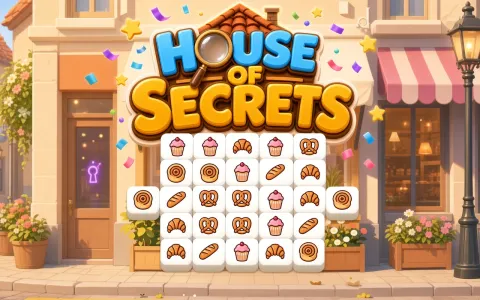 House of SecretsMatch three tiles, clear the boardPlay now
Every triple-tile game — Triple Match 3D, Zen Match, and House of Secrets among them — runs on the same two sentences. Tap an uncovered tile and it moves to a tray; collect three identical tiles there and they vanish. The losing condition is just as short: fill all seven tray slots without completing a triple and the level ends. That means the tray is not a holding area, it is your health bar. Almost every tip worth knowing comes down to one discipline: never spend a slot on a tile you cannot finish soon. Here is how that plays out tap by tap in House of Secrets, where every one of the 30 levels is solver-verified — a way through always exists, so when you lose, it was a decision, not the deal.
The tray is your health bar — count slots, not tiles
Seven slots sounds roomy until you do the arithmetic. Two different unfinished pairs occupy four slots; add a third pair and you are at six, one careless tap from defeat. The tray groups identical tiles side by side, which makes this easy to read at a glance: the moment you see three separate pairs sitting there, stop hunting for new tiles and finish something.
The worst habit in the genre is taking a second or third copy of a tile whose final match you cannot see anywhere on the board. A pair you cannot complete is dead weight that never leaves. Before sending any tile to the tray, ask the only question that matters: does this move me toward a triple I can actually finish? If the third copy is buried three layers deep, the answer is no, whatever the tile looks like.
Look under the tile before you tap it
Only tiles that nothing covers can be picked, and the boards in House of Secrets are layered figures — hearts, butterflies, arches, flowers — stacked up to five deep. So each tap does two things at once: it moves a tile to the tray, and it uncovers whatever was underneath. Experienced players choose taps for the second effect as often as the first.
When two tiles would serve your tray equally well, take the one sitting on the bigger pile. Freeing a covered area grows your options for the next several moves, while plucking a lone tile off the edge changes nothing but the tray. This is the quiet skill that separates a comfortable clear from a nail-biter: the board itself is a resource, and you want it opening steadily rather than all at once in a panic.
Peel the figure evenly from the edges instead of digging one deep hole. A single excavation exposes only a narrow column of tiles, and the matches you need stay hidden under the untouched wings of the figure. Even peeling keeps the widest possible menu of uncovered tiles in front of you.
Finish triples fast, even when it feels wasteful
There is a temptation to leave a completed-pair-plus-visible-third alone while you chase something else — the triple is safe, after all, it can wait. It cannot. Every turn that pair sits in the tray, it occupies two slots you may suddenly need. Completing a triple is the only move in the game that gives slots back, so take the third tile early and bank the space.
This matters most in the later levels. House of Secrets climbs from a friendly 54-tile opener to dense 138-tile boards, and on those, tray pressure is constant. The players who reach the end are not the ones who spot matches fastest; they are the ones whose tray spends the most time half-empty.
Boosters: three of each, and when to actually use them
Each level hands you three undos, three shuffles and three hints, and they reset every level — so hoarding them across the game is impossible and saving them all is its own mistake. The skill is spending them at the right moment within a level.
Undo is your escape hatch for the classic blunder: a tile sent to the tray whose match turns out to be unreachable. Pull it back the moment you realise, not five moves later when the tray is full. Shuffle rearranges what is left on the board and is worth most when the figure has collapsed into a shape where nothing useful is uncovered. Hint completes a triple for you, which is exactly why it should wait until late in the level — early on, matches are cheap to find with your own eyes, and a hint spent on move five is a hint missing on move fifty, when the board is thin and every match is genuinely hard to see.
One more rule of thumb: if you are about to place a seventh tile and no triple completes, that is what undo is for. Losing a level with unspent boosters is the one outcome to be embarrassed about.
Trust the board — every level is solvable
Every layout in House of Secrets has been verified by a solver before shipping: with careful play, a winning sequence of taps always exists. That is worth internalising, because it changes how you read a bad position. If nothing looks matchable, the game is not being unfair — the tiles you need are under something, and the question is which tap uncovers them at the least cost to your tray.
The 30 levels run through two locations, a bakery and a pottery workshop, each with its own themed tile sets — pastries and teapots, vases and glazes, over 250 icons in all. New tile art is the game's way of raising difficulty without changing the rules: unfamiliar icons take longer to tell apart, so give yourself a beat at the start of each level to scan what the set looks like before you start tapping.
Play it free in your browser
House of Secrets runs on crokocat with no download and no account, on desktop, phone and tablet — click tiles with the mouse or tap them on a touch screen. If you enjoy the read-the-board thinking here, Memory trains the same recall with classic card pairs, and Gem Sort applies the sorting instinct to colour-stacking puzzles. Same portal, same one-tap simplicity.
 MemoryFind all the pairsPlay now
 Gem SortSort the sparklePlay now
Frequently asked questions
How do you play a triple tile matching game?
Tap any tile that nothing covers and it moves to a tray at the top of the screen. Collect three identical tiles in the tray and they clear automatically. You win by clearing every tile from the board; you lose if all seven tray slots fill without completing a triple.
What is the best strategy for Triple Match 3D style games?
Protect the tray. Never take a second or third copy of a tile whose final match you cannot see, finish triples as soon as the third tile is available, and prefer taps that uncover large piles. Two unfinished pairs is caution territory; three is an emergency.
What happens when the tray is full in House of Secrets?
If all seven slots fill without a completed triple, the level is lost and you can retry it. The undo booster can return your last tile to the board before that happens — that is exactly what it is for.
When should I use the hint booster?
Late in the level, when few tiles remain and matches are genuinely hard to spot. Early on, finding triples yourself is easy, so a hint spent then is wasted. You get three hints, three undos and three shuffles per level, and they reset every level.
Are the levels in House of Secrets always solvable?
Yes — every one of the 30 levels has been checked by a solver before shipping, so a winning sequence of taps always exists. If you are stuck, the tiles you need are covered, not missing.
Guides & tips
Play it here
- House of Secrets — Match three tiles, clear the board
- Memory — Find all the pairs
- Gem Sort — Sort the sparkle