


Fish sort puzzles explained: how tank-and-tray sorting games work
Published October 31, 2026 · Updated November 1, 2026
 Fish SortTap the fish out of the bubbles and fill the tanksPlay now
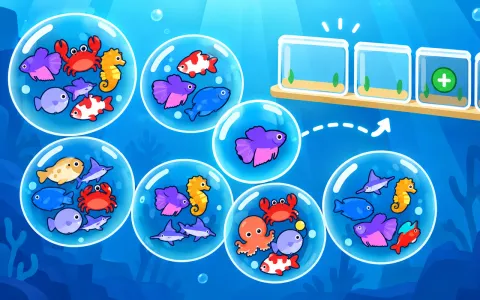
A fish sort puzzle is a sorting game where you tap fish out of floating bubbles and send them into glass tanks that each want three of one kind. Fish you cannot place yet wait in a small tray, and the level is lost when the tray fills with fish nobody wants. That is the whole genre in one breath: pick a fish, fill a tank, and keep the tray from overflowing. This article explains why such a simple rule holds up, what makes the levels harder, and how the style compares with other sorting puzzles.
The three parts of every fish sort puzzle
The pile is a heap of soap bubbles, and every bubble holds a mix of little sea creatures. The shelf holds the tanks. Each tank has a tag that shows which creature it wants and how many it already has, and three fish of the right kind fill it. The tray is the third part: a short row of slots, five in Fish Sort, where a fish waits when no tank wants it yet.
Everything the player does is one tap. Tap a fish and, if a tank is waiting for that kind, it swims straight in. If not, it parks in the tray. When a tank for a parked fish opens later, the fish in the tray hop over on their own. A full tank bursts, a new one drops onto the shelf asking for something else, and an emptied bubble pops so the pile settles.
That is a very small rulebook, and it is why the game is easy to start. You do not need a tutorial to understand a tank that wants three clownfish.
Fish SortTap the fish out of the bubbles and fill the tanksPlay nowWhy the tray makes it a planning game
The tank you need may want a fish that is buried deep in the pile. To get to it you have to take other fish out first, and those fish need somewhere to go. The tray is that somewhere, and it is small on purpose. Every fish you park spends one of a handful of slots, so each tap becomes a small bet: which bubble to empty so the pile falls the right way, which fish to park because a tank for it is likely to open next, and when to stop and wait for a better order.
The classic mistake is to treat the tray as a bin. A lone fish in the fourth slot leaves almost no room for the next surprise. Players who do well keep a slot free and park only kinds they can see several of in the pile, since a visible group is a tank waiting to happen.
This is the difference between a sorting puzzle and a sorting chore. Nothing in the rules is hard, but the order of the taps decides the level.
What makes later levels harder
Fish Sort adds obstacles gradually. Frozen bubbles thaw only after you take fish from their neighbours. Foggy bubbles hide what is inside until the same thing happens. Some fish are shown as question marks until you pick them, and keys pop out of one bubble to unlock a padlock on another. Later you meet timer tanks that must be filled before the clock runs down, surprise bubbles with more fish than you can see, stones to crack, fish frozen in ice, chained pairs that leave together and tanks that keep their wish a secret.
Each of these removes a piece of information or a piece of freedom. A frozen bubble takes away a choice; a fog takes away knowledge. The goal never changes, only how much you can see and reach, and that keeps long sessions from feeling repetitive.
Boosters help when planning is not enough: the rod catches fish for an open tank, the sweep clears the tray into a side pocket, and the shuffle mixes the fish inside the bubbles.
Where fish sorting sits among other sorting puzzles
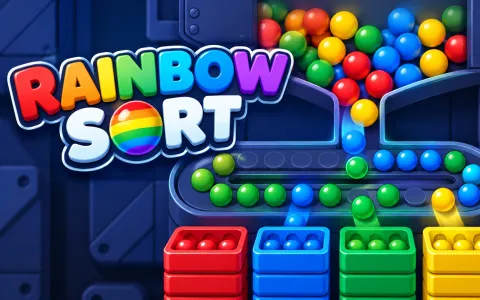
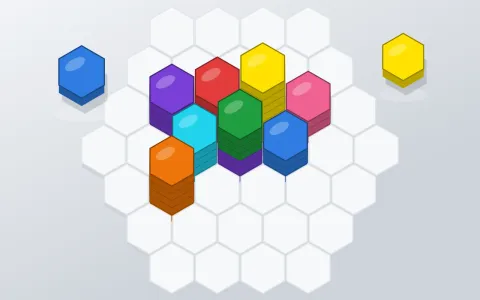
Sorting puzzles share one idea: put like with like, with some constraint that forces thought. They differ in what the constraint is. In Rainbow Sort you roll every marble into its colour. In Gem Sort the aim is to sort the sparkle by colour. In Comb Sort you stack colours until ten of a kind fly away, and in Bus Jam you dig out the right bus before the queue jams.
Fish sorting is closest to the tray-based branch: the limit is not the number of moves but the number of waiting places. You can make as many taps as you like, but only five fish can wait. That is also why it feels different from a pure colour-sort game, where the question is where to pour, not what to hold back.
Fish Sort is crokocat's own version for the browser, with its own creatures and levels, and it sits next to those other sorting puzzles on the site.
 Rainbow SortRoll every marble into its colorPlay now
 Gem SortSort the sparklePlay now
 Comb SortStack the colors until ten of a kind fly awayPlay now
Why these games feel relaxing
There is no enemy and no reflex test. A level normally takes a minute or two, the timer is gentle and only starts with your first tap. Each popped bubble and each filled tank is a small, clear reward, and the aquarium gets visibly emptier as you go.
More than three hundred sea creatures swim through the game and a level uses around fifteen of them, so the board looks fresh each time. Levels are generated, so there is no last one. For a quick break that still asks you to think, that mix is hard to beat.
Frequently asked questions
What is a fish sort puzzle?
A sorting game where you tap fish out of bubbles into tanks that each want three of one kind. Fish with no tank waiting go into a small tray.
How do you win a fish sort level?
Sort every fish in the aquarium into tanks. You lose if the tray fills with fish that no open tank wants, or if the clock reaches zero.
Why is there a tray?
It gives fish a place to wait while you dig for the ones a tank needs. Because it holds only five fish in Fish Sort, it is what turns the game into a planning puzzle.
Is a fish sort puzzle the same as a colour sort puzzle?
They are cousins. Colour sorting is mostly about where to place items; in a fish sort game, the main question is which fish to hold back in the tray and which bubble to empty first.
Can I play Fish Sort for free?
Yes. Fish Sort runs in your browser on desktop, phone and tablet with no download and no sign-up.
Guides & tips
Play it here
- Fish Sort — Tap the fish out of the bubbles and fill the tanks
- Rainbow Sort — Roll every marble into its color
- Gem Sort — Sort the sparkle
- Comb Sort — Stack the colors until ten of a kind fly away
- Bus Jam — Dig out the right bus before the queue jams