


Touchdown tips: how to land softly and score 90+ every time
Published October 24, 2026 · Updated November 1, 2026
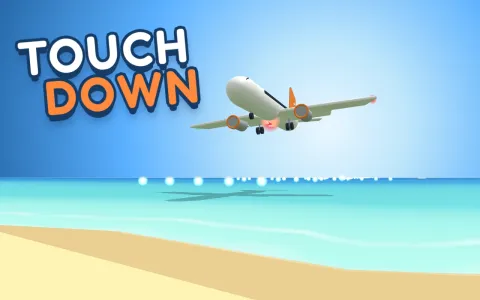 TouchdownFly the approach and land it softPlay now
The short version of every plane landing game: fly the glide path with small corrections, lower the gear early, and lift the nose only in the last few metres above the runway. Touchdown scores each landing out of 100, and 90 or more earns three stars, so the difference between a crash and a perfect landing is almost always one of those three habits. This guide shows how to read the lights, what each crash message means and how to handle crosswind, fog and windshear.
Read the PAPI lights instead of guessing the height
Four lights sit beside the runway, and they tell you whether you are on the glide path. Two white and two red means you are exactly where you should be. All white means you are too high, all red means you are too low. Anything in between is a smaller version of the same message: more white than red, you are a little high; more red than white, a little low.
The green ring in front of the plane shows the same thing from a different angle: fly through it and you stay on the path. Use the ring for the big picture and the lights for the fine correction. When the lights go red, ease the nose up a touch; when they go white, ease it down. Do not chase them with big movements, because a large correction only flips you from too high to too low.
Small inputs, early gear, late flare
Touchdown is flown with one stick: drag sideways to bank and turn, up to lift the nose, down to lower it. A big bank swings the plane straight past the centreline, so make small drags and let the plane settle before you correct again.
Lower the gear early. The lever flashes and beeps if you forget, but there is nothing to gain by waiting, and a landing with the gear up is an instant crash. Tap the lever as soon as the runway is in sight and then forget about it.
The flare is the last move: just above the runway, drag up to lift the nose and soften the touchdown. Timing matters in both directions. Pull up too early and you float past the aiming bars with the runway running out; forget to flare and the plane thumps down hard. Wait until the final few metres, then lift.
What the score is made of
Every landing is judged on four things: how gently you touched down, how close you were to the aiming bars, how well you held the centreline and how level the wings were. Ninety points and up earns three stars.
That breakdown tells you where the missing points went. A soft touchdown on the wrong part of the runway loses points for distance; a perfect line with a hard landing loses points for sink rate. If you keep getting two stars, pick one of the four and work on it for a few levels instead of trying to fix everything at once.
Why did I crash? The causes, one by one
The card after a crash names the reason, and each reason has a single fix. Gear up: lower the lever earlier. Too hard: flare, and start the flare slightly sooner than you think. Wing strike: the wings were tilted at touchdown, so level out before the wheels reach the ground. Landed short or missed the runway: you were too low on the approach, so watch for red lights and correct early. Off the runway: you drifted sideways, usually from a late or oversized bank.
Read the card before you restart. Most players retry the same approach three times and make the same mistake three times, when the card has already said which habit to change.
Crosswind, gusts, fog, night and windshear
Later levels add weather, and each condition asks for a slightly different habit. In a crosswind, point the nose a little into the wind and let the plane drift straight down the runway rather than steering back to the centreline in sharp turns. Gusts and turbulence reward calm hands: keep your corrections small and wait for the plane to answer.
Fog and night take away the view, so the lights do the work. At night you have only the runway lights to guide you, which makes the PAPI lights the most important thing on screen. Windshear drops you a few metres with about a second of warning, so be ready to lift the nose immediately instead of waiting to see what happens.
Some levels start you off to one side, too high, or on a shorter, narrower runway. Look at where the centreline is before you move anything, and spend the first seconds lining up rather than descending.
Use the guide and the rewind wisely
Stuck on a tricky approach? The guide draws frames along the ideal glide path for you to fly through. You start with three, and a short video gives you more, so save them for the approaches where the weather really changes the picture. A video can also rewind the last five seconds after a crash, once per level, which is best spent when you were a second from touchdown rather than at the start of the approach.
If you like the one-input feel of Touchdown, Sky Rails is a one-button train game where patience on the curves wins more than speed, and Drift Line is one-tap drifting on a zigzag sky road. Both are good for practising the same smooth, early inputs.
 Sky RailsDrive a little train over a rail bridge high above the cloudsPlay now
 Drift LineOne-tap drifting on a zigzag sky roadPlay now
Frequently asked questions
How do I land softly in Touchdown?
Fly down the glide path, then drag up to lift the nose in the last few metres above the runway. Too early and you float past the aiming bars; too late and you land hard.
What do the red and white lights mean?
They are PAPI lights. Two white and two red means you are on the glide path, all white means too high and all red means too low.
How many points do I need for three stars?
Ninety out of 100. The score combines how softly you touched down, how close you were to the aiming bars, how well you held the centreline and how level the wings were.
Why did I crash?
The card tells you: gear up, too hard, wing strike, landed short, off the runway or missed the runway. Each one points to a single habit to fix.
What is the guide for?
It draws frames along the ideal glide path. You start with three guides and a short video gives you more.
Guides & tips
Play it here
- Touchdown — Fly the approach and land it soft
- Sky Rails — Drive a little train over a rail bridge high above the clouds
- Drift Line — One-tap drifting on a zigzag sky road