


Memory game tips: how to actually remember where the cards are
Published August 23, 2026 · Updated September 8, 2026
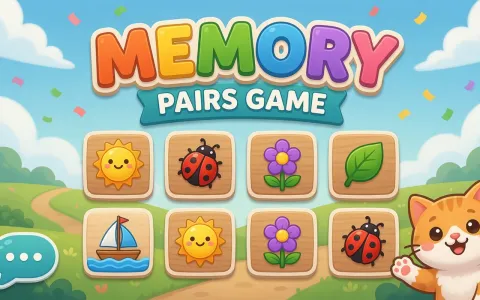 MemoryFind all the pairsPlay now
The frustrating thing about the pairs game — Memory, Concentration, whatever your family called it — is that the rules take five seconds and the skill takes forever. You flip a card, flip another, they do not match, and thirty seconds later you flip the exact same card again with total confidence. The fix is not a better brain; it is a better method. Good Memory players do three things differently: they name every card they see instead of just looking at it, they treat every miss as paid-for information, and they work the board in a fixed order instead of hopping around. This guide walks through each habit using the Memory game on crokocat, where boards grow from six cards to thirty and a combo multiplier pays you for remembering instead of guessing — but the method works on any pairs game, cardboard included.
Name the card, not the picture
The single biggest upgrade is verbal encoding. When a card flips, do not just see it — say it to yourself with its position attached: panda, top right. A vague visual impression fades in seconds, but a short spoken label sticks, because you have turned a picture into a fact. This is why some people seem to have a photographic memory for pairs: they are usually not photographing anything, they are narrating.
Position labels work best when they are coarse. Top right, middle left, bottom corner — chunks like that survive a dozen flips, while exact coordinates like row three, column four collapse under their own weight. On small boards a corner-based map is all you need; on bigger boards you will refine it region by region, which is a later section's job.
A miss is two free pieces of the map
Every failed turn reveals two cards. Players who shrug and move on are throwing that away; players who win treat each miss as a purchase. The cards flip back down, but the information does not go anywhere unless you let it — so before your next move, replay the miss once: fox, middle left; cupcake, bottom row. Two labels, one second, done.
This is also why the strongest opening on a fresh board is not random flipping but deliberate surveying. If nothing is known yet, flip cards you have never seen rather than gambling on half-remembered ones. Early turns are cheap — the point is not to match immediately, it is to load the map. A player who spends the first few turns surveying will spend the rest of the level cashing in sure matches while the random flipper is still rediscovering the same duck.
The corollary: never reveal a known card to chase an unknown one. If you know where one panda sits, do not flip it hoping the second panda turns up somewhere — flip the unknown card first. If it is the panda, you complete the pair on the same turn; if it is not, you have learned a new card without spending any information you already owned.
Work the board in regions, corners first
Random flipping scatters your attention across the whole grid, and the labels blur together. Instead, divide the board into a few regions and clear one at a time. Anchors come free: corners and edges are the easiest positions to remember, so lock those in first and let the middle come last. On the thirty-card board this is the difference between a map you can hold and a fog of half-familiar tiles.
The early levels of Memory on crokocat show every card face up for a moment before the round starts. Use that preview on the anchors — corners first, then edges. You cannot memorise eighteen cards in a flash, but four corners is a realistic haul, and it seeds your map before you spend a single turn. The preview shrinks as the levels climb and disappears entirely by level five, so the habit of building your own map has to be ready by then.
Combo math: sure things while it is hot, coin flips after it resets
Scoring in Memory on crokocat rewards streaks: the first match in a row pays 100, the next 200, then 300 and up — and a single miss drops the multiplier back to the start of the ladder. That turns move order into strategy. A guess is not just a possible miss; it is a possible miss that torches a hot streak.
So sequence your turns by confidence. While the combo is climbing, spend only sure matches — pairs where you know both positions. Save the fifty-fifties for the moment right after a reset, when a miss costs you nothing extra and the reveal still buys you two labels. Same flips, same board, very different score.
A clean level with no misses pays a bonus on top, which prices patience even higher. If you are one turn from finishing and not certain, remember that a wrong guess costs the perfect bonus as well as the streak — on the last few pairs, certainty is worth an extra surveying turn.
The board grows — your method has to scale
Memory on crokocat starts at a friendly six cards and climbs to a thirty-card wall, with the preview gone from level five onward. Six cards need no system at all; thirty cards will defeat raw staring every time. The techniques above are not decoration, they are the only way the big boards stay playable: regions keep the map small, verbal labels keep it durable, and combo discipline keeps the score ticking while you work.
There is no timer and no fail state — the game never takes the board away from you. The only opponent is your own miss count, which is what makes it such an honest trainer: every mistake is a label you failed to make or a guess you did not need to take. One habit worth stealing for the endgame: as pairs clear, the board empties and the remaining cards get easier to track, so late-level misses are the expensive kind. Slow down as the grid thins, not the other way round.
Play it free in your browser
Memory runs free on crokocat with no download and no sign-up, on desktop, phone and tablet — click a card to flip it, find the pair, keep the streak alive. If you enjoy the mapping-and-deduction side of it, Find the Sheep scratches the same itch from the logic end: a queens-style puzzle where you place one sheep per colour, row and column, and never have to guess at all. Two short games, one habit — knowing instead of hoping.
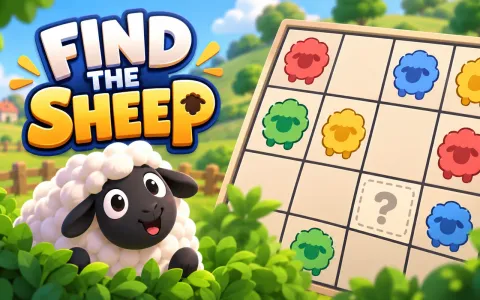 Find the SheepOne sheep per colorPlay now
Frequently asked questions
How do you win a memory game?
Name every revealed card with a position label, work the board region by region starting from the corners, and never flip a known card to search for its partner — flip the unknown card first. Wins come from fewer misses, not faster flipping.
What is the best strategy for the concentration card game?
Survey first, match second. Spend early turns revealing cards you have not seen to build a mental map, treat every miss as two learned positions, and only chase matches you are sure of. Random flipping rediscovers the same cards over and over.
How does scoring work in Memory on crokocat?
Matches in a row build a combo: the first pays 100 points, the next 200, then 300 and up. One miss resets the multiplier to the start, and a level cleared without any misses earns an extra bonus.
Does the game get harder as you play?
Yes. Boards grow from 6 cards to 30, and the face-up preview you get on early levels shrinks each level and disappears entirely from level five — after that your own memory is the only map.
Can you lose at Memory?
No — there is no timer and no fail state, so the board stays until you clear it. The challenge is your best score, which rewards clean, low-miss runs over lucky streaks.
Guides & tips
Play it here
- Memory — Find all the pairs
- Find the Sheep — One sheep per color