


The psychology of 'one more run': why short games hook us
Published September 16, 2026
 Stickman RunRun the tunnel, swing the ropePlay now
Why are games addictive — or at least, why does a sixty-second runner make you say 'one more' twelve times in a row? The short answer: small games are built around a loop your brain already likes. A clear goal, instant feedback, a quick ending that never feels final, and a result that was almost better than the last one. A run that ends in a wipe-out and restarts in one tap removes every reason to stop and adds a strong reason to try again. Below are the mechanisms behind that feeling — near misses, variable rewards, sunk cost, flow — with three short crokocat games as examples.
The loop is short on purpose
Every game has a loop: do something, see what happened, decide what to do next. What sets short games apart is how tight it is. In Stack to the Stars a block slides across the screen, you tap, and the overhang is sliced off before you finish blinking. Intention, action and consequence fit inside a second; a whole run takes a minute or three.
That matters because immediate feedback shapes behaviour far more strongly than delayed feedback — the oldest finding in learning psychology. Your inbox does not tell you within a second whether the email was good. A stacking game tells you before your finger lifts.
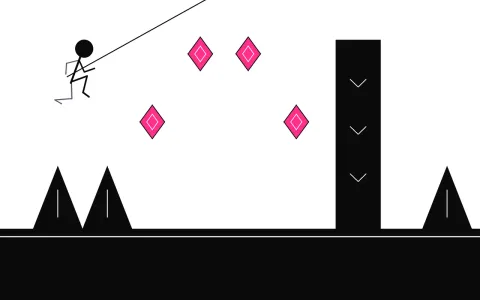
The other half is the restart. In Stickman Run, dying puts you back at the start with one tap and no loading screen. Trying again costs nothing, and the moment you most want to — right after a death you understood — is exactly when the game offers it. Long games have natural pauses: a level ends, a save point appears. A short game never gives you that moment.
Stickman RunRun the tunnel, swing the ropePlay now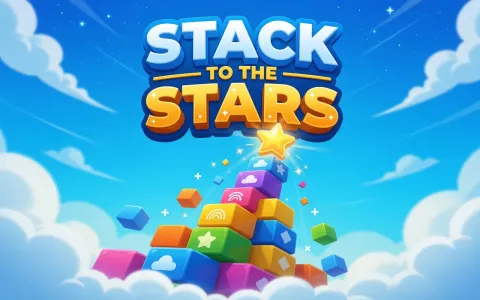 Stack to the StarsEndless stackingPlay now
Near misses feel like almost winning
The most powerful ingredient in 'one more run' is the near miss. Studies of slot machines found that outcomes which look almost like a win — two matching symbols and a third just off — engage reward-related brain activity in a way plain losses do not, and keep people playing. The brain reads 'nearly' as evidence the win is close, even when the outcome was never in your control.
In a skill game, though, a near miss usually is evidence. When your stickman clips the last spike before a rope sign, or your tower falls one floor short of a personal best, the gap between what you did and what you needed is real and small. The fix is obvious: tap a fraction earlier. That is a far more honest version of the effect than a slot machine, and it is why the pull is so strong. You are not imagining the next run could go better. It could.
Score-chasers lean into this by keeping your best result on screen: a number a few points above the one you just got is a permanent near miss.
Rewards you can't predict
Psychologists distinguish rewards on a fixed schedule from rewards that arrive unpredictably, and the unpredictable kind produces the most persistent behaviour: if you never know which attempt will pay off, you keep attempting. This 'variable ratio' schedule is why slot machines work, but it is also how skill games with random elements feel from the inside.
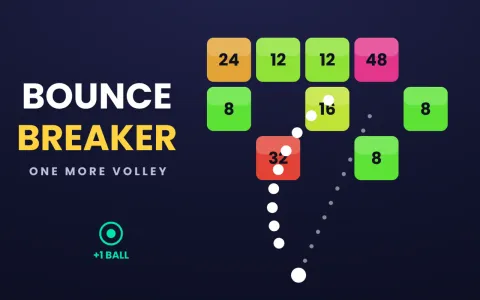
Bounce Breaker builds variable reward out of physics rather than dice. You aim one shot, release, and the fan of balls ricochets around the wall of numbered bricks. Sometimes the volley slips behind the wall and rattles there for ages, shaving a dozen bricks at once; sometimes the same-looking shot dies in three bounces. The rules are deterministic, but the outcome feels like a roll of the dice you partly control — and that 'partly' is the hook. A fully random game is boring because nothing you do matters; a fully predictable one because there is nothing left to find out.
Stickman Run does the same with its seeded tunnel: the layout is new each run, so the occasional reward is a stretch that suited you and carried you further than you thought possible.
 Bounce BreakerOne more volleyPlay now
Sunk cost and the resurrect button
Once you have invested in something, walking away feels like losing the investment. Economists call this the sunk-cost fallacy; designers call it a retention mechanic. The clearest version in a short game is the resurrect: Stickman Run lets you spend banked pink gems to get back up where you fell, with the ground around you cleared. The first resurrect in a run costs five hundred gems, the second a thousand, the third fifteen hundred.
That escalating price is clever. The deeper the run, the more you have put in and the more it hurts to let it end — so the more you will pay. But the price rises too, so each resurrect is a harder call than the last. The game turns 'should I keep going' into an explicit trade you can reason about, which is what makes it feel fair rather than manipulative.
Bounce Breaker has a slower version with no purchase at all. Your swarm grows one ball at a time as you catch +1 pickups, and twenty rounds in, quitting means abandoning a swarm you spent twenty rounds building.
Flow: the good version of losing track of time
Not every reason you keep playing is a trick. The best-known benign explanation is flow — the state Mihaly Csikszentmihalyi described where a task's difficulty matches your skill closely enough that attention narrows, self-consciousness fades and time seems to move differently. Flow needs a clear goal, immediate feedback and a challenge just above what you can comfortably do. Short arcade games are practically a checklist for it.
The difficulty curve is the crucial part. Stack to the Stars speeds up the blocks as the tower rises; Stickman Run gets faster and denser with distance; Bounce Breaker's brick numbers grow with the round counter. The challenge climbs with you, so a run always ends near the edge of your ability — right when it was getting interesting, which is no accident.
Flow is also why a few minutes of a small game can feel restorative rather than draining: short absorbing tasks are consistently linked with lower stress and better recovery from mental fatigue.
When the loop is healthy and when it isn't
These mechanisms are neutral. The near-miss effect that gets you to stack one more tower is the same one that keeps people feeding a slot machine; the difference is in the design around it. Three questions separate a good loop from a bad one. Does skill change the outcome? Does the game keep any natural stopping point? And is there money on the other side of the sunk cost?
By those tests, small skill games score well. Your tower falls because of your tap, not a random number. Nothing carries over except a high score and gems you cannot buy, and nothing is sold to you at the moment of maximum frustration. That is a loop that respects you, even while it is winning.
The honest caveat: low stakes make it easy to lose half an hour without noticing. The fix is to use the psychology rather than fight it — decide on a number of runs or a target score before you start, and let the end of a run be your stopping point.
Frequently asked questions
Why are short games more addictive than long ones?
Because the loop is tighter. Feedback arrives within a second, a run takes a minute, and restarting costs nothing. Long games have built-in pauses like level ends and save points; short games never give you a natural reason to stop.
What is the near-miss effect in games?
Outcomes that look almost like a win — one floor short of a high score, dying on the last spike — are processed more like wins than losses and push you to try again. In skill games the near miss is real information: the gap is small and you know how to close it.
Are one-more-run games bad for you?
They use the same mechanisms that make gambling compelling, but the design differs: skill decides the outcome and nothing is sold at the point of frustration. The practical risk is losing track of time, so set a run count before you start.
What is a game loop?
The repeating cycle of act, get feedback, decide again. In Stack to the Stars it is slide, tap, slice; in Bounce Breaker, aim, fire, watch the wall drop. The shorter and clearer the loop, the stronger its pull.
How do I stop playing 'one more run'?
Use the game's own structure. Pick a target — three runs, or a specific score — before the first tap, and treat the end of a run as the stopping point. Deciding in advance is much easier than fighting the urge mid-run.
Guides & tips
Play it here
- Stickman Run — Run the tunnel, swing the rope
- Bounce Breaker — One more volley
- Stack to the Stars — Endless stacking