


How to never lose at tic-tac-toe (and what happens on bigger boards)
Published August 26, 2026 · Updated August 28, 2026
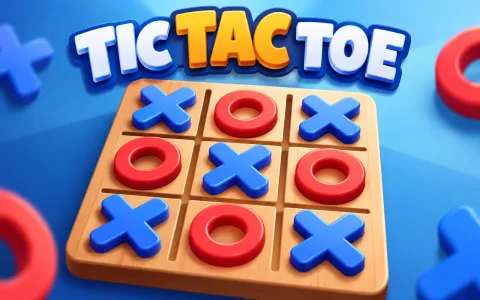 Tic Tac Toe ClassicOutsmart the computerPlay now
Tic-tac-toe strategy fits on an index card: check for your own winning move, then for theirs, then for a fork, and only then think about position. Run that checklist on every turn and you will never lose a 3×3 game again — not to a friend, not to a computer. Winning is a different matter. Against an opponent who also knows the checklist, every game of tic-tac-toe ends in a draw, which is exactly why the version on crokocat refuses to stay small: beat the computer on 3×3 and the board grows to 5×5, then 7×7 and 9×9, where the neat rules of the little grid stop working and the real strategy begins.
The checklist that makes you unbeatable
Every turn, ask four questions in strict order. One: can I complete three in a row right now? If yes, do it — the game is over. Two: can my opponent complete three in a row on their next move? If yes, block that square, no exceptions. Three: can I place a mark that creates two ways to win at once? That is a fork, and it wins by force, because a single block cannot cover two lines. Four: is my opponent one move away from a fork? Then deny it — either take the forking square yourself or make a threat they must answer first.
Only when all four answers are no does position matter, and the order of preference is short: centre first, then a corner opposite one the opponent holds, then any empty corner, then any empty side. The centre sits in four lines, corners sit in three, sides in only two — which is the whole reason centre and corners dominate the game.
The discipline is in questions two and four. Most lost games of tic-tac-toe are not lost to brilliant attacks; they are lost to a player who was so busy building their own line that they never looked at the other side of the board. Check their threats before admiring yours, every single turn.
Playing first: why the corner is the trap move
If you move first, the centre is the safest square on the board — but the corner is the one that wins games. A corner opening looks harmless, and against an opponent who answers with anything other than the centre, it is already close to winning: you take a second corner, threaten a line, and the forced block lets you take a third corner and fork. From the first move, the opponent had exactly one safe reply.
Against someone who does answer the corner with the centre, no trick works and the game heads for a draw — which tells you what the corner opening really is: not a guaranteed win, but the move that gives a fallible opponent the most ways to go wrong. The centre opening is the reverse: harder to lose with, but it hands a careful opponent an easy, symmetrical path to the draw.
So pick your opening by your opponent. Against the first level of Tic Tac Toe Classic, which plays like a distracted friend and will miss things, open in the corner and take the win. Against a player running the same checklist you are, either opening leads to the same handshake.
Playing second: the centre is not optional
Going second, your first decision is nearly automatic. If the opponent opened in a corner, you must take the centre — every other reply loses to correct play, because it leaves the double-corner fork open. If they opened in the centre, take a corner; a side square gives them fork chances that a corner does not. If they opened on a side, the centre is once again your friend.
This matters in Tic Tac Toe Classic because the first move alternates every round — neither you nor the computer keeps the opening advantage, so half your games start on defence. Going second means your early moves should answer rather than build: survive the opening with the right reply, keep running the checklist, and the draw is yours even against the strongest level.
The most common way second players lose is greed. Down a move, they try to build a line of their own while the opponent already has two marks placed, and the checklist gets skipped exactly once — which is all a fork needs.
The double-corner fork, and how to defuse it
The one trap worth knowing by name: your opponent holds two opposite corners, you hold the centre, and it is your move. Place your mark in a corner and they take another corner, building two lines at once — a fork, and the game is lost. The correct move looks passive and wins the draw: play a side square. The side threatens a line through the centre, forces a block, and burns the tempo they needed to set the fork up.
The pattern to internalise is not this one position but the principle behind it: when the opponent is collecting corners, answer with threats, not with territory. A forced block is the only move that never loses time, and forks die when their builder has to spend a turn defending.
This is the fork the crokocat version watches for too — take the centre when you can and keep an eye on the double corner, and the 3×3 board holds no further surprises.
When the board grows, the rules change underneath you
Perfect 3×3 play is a solved memory test, so Tic Tac Toe Classic treats it as the front door. Win and the board becomes 5×5, where you need four in a row; win again and you reach 7×7 and then 9×9, both played to five — the same family of rules as gomoku, the pen-and-paper classic that has been sharpened for centuries. The computer grows with the boards: by the last one it hunts double threats, reads your open threes, and punishes lazy moves.
The corner-and-centre lore of the small grid does not carry over. On eighty-one squares there is no memorised opening to fall back on, and single threats always get blocked — the winning idea becomes building two threats the opponent cannot answer at once, keeping your marks connected instead of scattered, and never letting the computer keep a three that is open at both ends.
What does carry over is the checklist habit. Threats first, position second, opponent's plans before your own — the questions stay identical, there are just more squares to ask them about. Players who learned the discipline on 3×3 adapt to the big boards much faster than players who learned only the openings.
Two boards to practise on, free in your browser
Both tic-tac-toe games on crokocat run in the browser with no download and no sign-up, on desktop, phone or tablet. In Tic Tac Toe Classic you play X against the computer's O — tap any empty cell to place your mark, make a straight line to win. Wins bank points scaled to the level, a loss resets your streak to zero and replays the same board, and the alternating first move means you practise both sides of every opening whether you like it or not.
Tic Tac Battle wraps the same growing boards in a fighting-game shell: pick an emoji fighter on the VS screen, hit Fight!, and watch two HP bars swing with every move as either side lines up a threat. Each board you win unlocks a new face for your roster, saved on your device. Play them side by side — Classic is the cleaner drill for the checklist, Battle shows you the state of the board as health you can read in half a second.
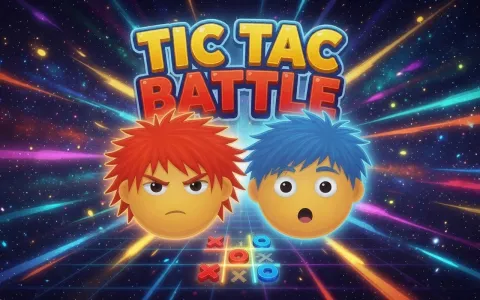 Tic Tac BattlePick a fighter, drain their HPPlay now
Frequently asked questions
Can you always win at tic-tac-toe?
No. With correct play from both sides, every 3×3 game is a draw. What you can do is never lose — run the checklist of win, block, fork, block-fork on every turn — and win whenever your opponent skips a step. Guaranteed wins only exist against mistakes.
What is the best first move in tic-tac-toe?
The centre is the safest, since it sits in four lines. The corner is the trickiest: against an opponent who replies with anything but the centre, it leads to a forced fork and a win. Against perfect play, both openings draw.
How do you stop a fork?
Before it exists. If a square would give your opponent two ways to win at once, either take it yourself or make a threat that forces them to block. Once both threats are on the board, no single move answers them — forks are prevented, not escaped.
Who moves first in Tic Tac Toe Classic?
It alternates every round, so neither you nor the computer keeps the opening advantage. Wins bank points scaled to the level, and a loss resets your streak and replays the same board.
What changes on the 5×5 and 9×9 boards?
The target grows — four in a row on 5×5, five on 7×7 and 9×9 — and memorised openings stop working. Play shifts to gomoku-style strategy: build two threats at once, keep your marks connected, and never let the computer keep a three open at both ends.
Guides & tips
Play it here
- Tic Tac Toe Classic — Outsmart the computer
- Tic Tac Battle — Pick a fighter, drain their HP