


Rock Slide tips: how to roll farther, grow bigger and reach the finish
Published November 7, 2026 · Updated November 25, 2026
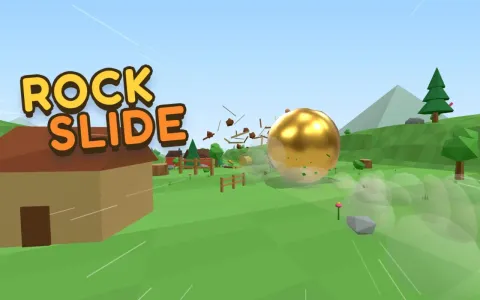 Rock SlideSling a boulder down the hill and smash everything smallerPlay now
To roll farther in Rock Slide, steer through fields of small things, never meet something bigger head-on, and spend your coins so the sling can carry the rock over uphill stretches. Every smash grows the rock during the run, a glancing hit only slows it, and a head-on hit into something bigger ends the run. If you came from Just a Rock or a Katamari-style game, the loop will feel familiar, but a few details decide how far a run goes: the pull on the slingshot, the order of the three upgrades, and the moment you spend the meteor. This guide covers all of them.
What actually ends a run
Rock Slide has one long track down a hillside, and you will not finish it on the first try. A run lasts until the rock stops, sinks in a pool, or hits something bigger than itself head-on. That is the whole list, so every tip below comes down to avoiding one of those three.
A glancing hit is not a failure. It only slows the rock down, which costs speed but keeps the run alive. The head-on hit into something too big is the one to fear, so look ahead and steer round anything that is clearly larger than your rock before you reach it.
Water and lava are the other trap: they slow the rock and swallow a small one. Early in a run, when the rock is still a pebble, give pools plenty of room. Later, when it has grown, they matter less.
Pull back, then steer for small things
The launch sets the tone. You pull the rock back on the slingshot and let go, and the further you pull, the faster it flies. A half-hearted pull wastes the start of the track, so pull all the way unless you have a reason not to.
Once the rock is rolling, drag left or right to steer, or use the arrow keys or A and D. Anything smaller than your rock breaks without slowing it down, and every smash fills the level bar above the screen. Each level makes the rock bigger and faster for the rest of the run, so the best line is rarely the straight one. Look for fields of fences, trees, barns and fleeing tourists, and weave through the small things first. A rock that has levelled up on the early smashes can then flatten what stopped it on the previous run.
Think of the track in layers. The soft, dense starts are where the rock gathers speed and size. Later stretches ask more of it: uphill climbs, narrow passes, and rows of fences or rocks that only a big enough boulder breaks through.
Uphill stretches and gates
Two kinds of obstacle separate a good run from a short one. Uphill stretches stop a slow rock, so the speed you carry into them matters, and a stronger sling is what carries you over. If a run keeps dying on the same climb, the answer is usually a faster launch rather than cleverer steering.
Rows of fences and rocks across the track work as gates. They stay closed until your rock is big enough, then they open. Treat each gate as a size check: if you reach it with a rock that has been feeding on small things the whole way, it breaks through, and if you came in on a thin line with little growth, it does not.
The glowing line on the ground marks your best distance so far. It is a handy target: you know exactly where the last run ended, so you can aim to arrive there bigger and faster.
Spending coins: Sling, Rock, Income
Every run pays coins for the metres you rolled and for what you smashed on the way, and you spend them on three upgrades before the next launch. Sling makes the launch faster. Rock makes the boulder bigger, smoother and less draggy, so it rolls further. Income multiplies every payout.
There is no single correct order, but a sensible one follows what is killing your runs. If the rock stops on uphill stretches, put coins into Sling. If it gets stuck at gates or loses speed in the middle of the track, put them into Rock. Income is the long game: it pays off on every run that follows and stays when the stage changes, so a few early purchases there make the later ones cheaper to reach.
Every fifth purchase of Sling or Rock is a milestone, and the rock changes its material. It climbs from field stone and sandstone through coal, copper and iron to silver, gold and gems, and on later stages to obsidian, magma, lava and finally a fireball. Reaching the next milestone is a good short goal for a single session.
The meteor, the tourists and the finish
The meteor button, or Space, sets the rock on fire for a couple of seconds, and a burning rock breaks anything in its path. Save it for the gate or the barn you cannot break yet, not for something you could have steered round. A charge comes back for free every third run, and a short video refills it when you want one right away.
Tourists stand along the track and run when they see a rock coming. They are small, so they are free growth, but chasing them off the best line is rarely worth it.
Cross the finish line and the stage is cleared: your income doubles for good, and the next track opens on a new landscape with a fresh rock and sling. There are four landscapes, and after the fourth the tracks come round again, longer and with steeper prices. A short video on the result card also doubles the coins of a good run, which is worth taking after a long one.
If you like this loop
Rock Slide is a calm upgrade-and-smash game with a clear goal at the end of the hill. If you enjoy the idea of growing by what you roll over, Snow Roller uses the same instinct in a race: you push a snowball up a snowy course, it grows on fresh snow, and you unroll it into bridges over icy rivers. It is faster and has rivals, but the habit of looking for untouched material to grow on carries over.
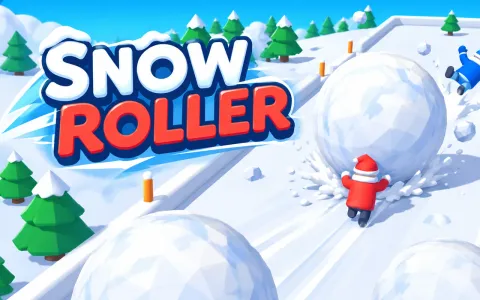 Snow RollerRoll the biggest snowball, bridge the river, win the racePlay now
Frequently asked questions
What ends a run in Rock Slide?
The rock stops on an uphill stretch, sinks in a pool, or hits something bigger than itself head-on. A glancing hit only slows it down.
What should I upgrade first?
It depends on what ends your runs. Sling helps when the rock stops on uphill stretches, Rock helps with gates and speed, and Income pays off on every later run.
When should I use the meteor?
Save it for a gate or barn the rock cannot break yet. It lets the rock break anything for a couple of seconds, and you get a free charge every third run.
What happens when I finish a stage?
The stage is cleared, your income doubles for good, and the next track opens on a new landscape with a fresh rock and sling.
Guides & tips
Play it here
- Rock Slide — Sling a boulder down the hill and smash everything smaller
- Snow Roller — Roll the biggest snowball, bridge the river, win the race